Need storm & hail damage roof repair in Shelton?
Request an estimate and a local provider in our network will reach out. Prefer to talk? Request a callback to ask about availability.
No obligation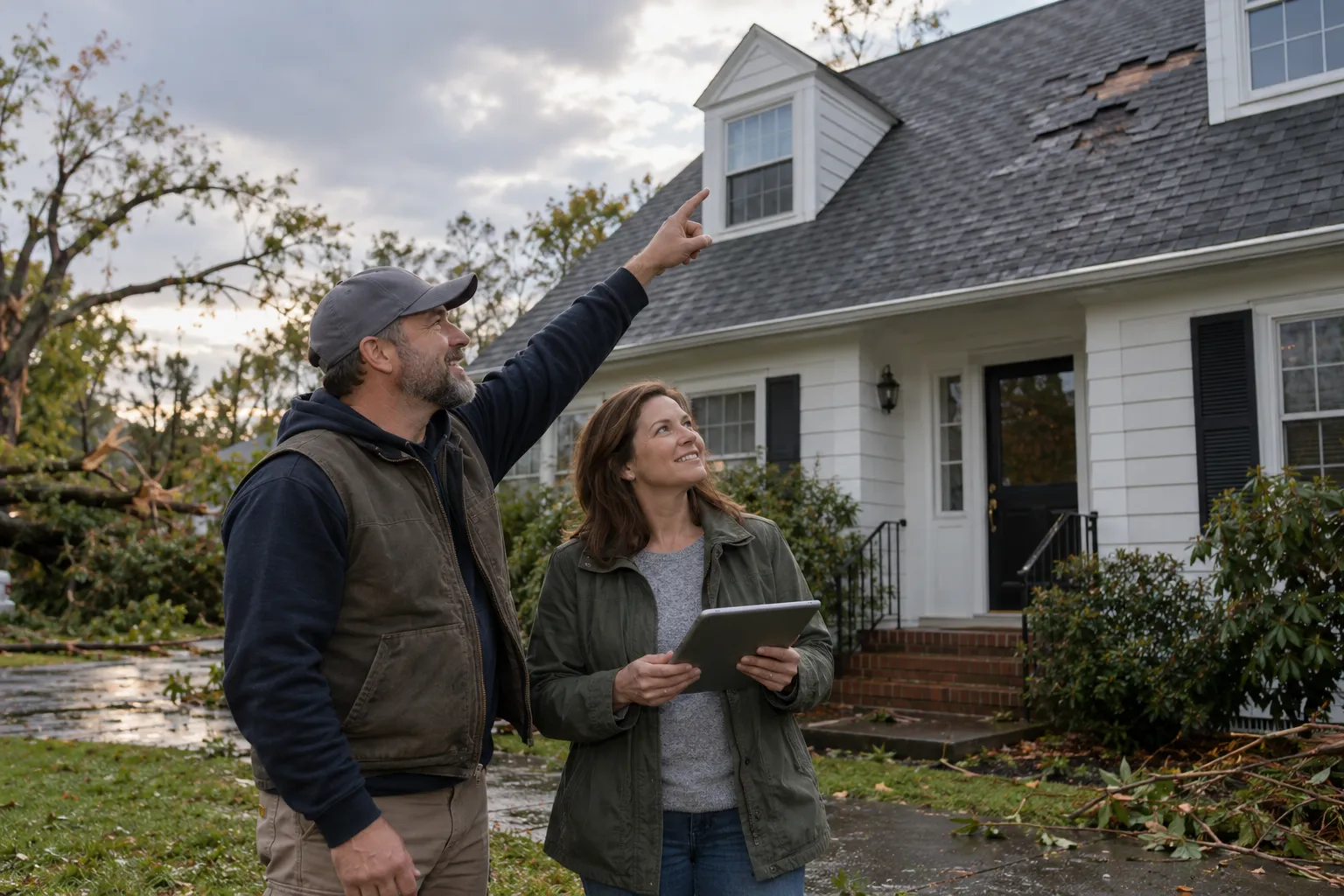
Request your estimate today
A bad storm can change your roof in minutes. Hail can bruise shingles, wind can lift them, and a fallen branch can punch a hole. Some damage is easy to see. Other damage hides until the next rain finds it.
Continuetrading Roofing is a referral service. We do not do the work. We connect homeowners in Shelton and the Shelton area with independent local roofing providers in our network. A provider checks the roof, explains what the storm did, and talks through your options. If the damage is serious, that may mean planning a new roof. You get plain answers and a written quote, so you can decide at your own pace.
Think of a storm like a car fender bender. The first job is to make sure everyone is safe. The repair talk comes later.
Stay off the roof. Wet shingles are slippery, and damaged boards can give way. Walk around your home and look up from the yard. Take clear photos of anything that looks wrong, such as missing shingles, dents in gutters, or branches on the roof.
If a ceiling is sagging or dripping near a light fixture, stay out of that room. Water and wiring do not mix.
A tarp works like a rain hat. It does not fix anything. It only keeps water out for a while.
People often search for emergency roof repair at this point. For most homeowners, the safe move is to move belongings, set out buckets, and ask a provider about a temporary cover. Do not climb up and nail one down yourself. Providers in our network focus on planning full roof work, and many can tell you what a temporary cover involves.
A small tear in a roof is like a small hole in a boot. Today it only dampens your sock. Next week the whole boot is soaked.
Water that slips under shingles soaks the boards and insulation below. Then it can stain ceilings and grow mold. In cold weather, that trapped water freezes and expands, then thaws and does it again. Each freeze-thaw round pries the gap wider.
Hail acts like a hammer on an apple. The skin may look fine, but there is a bruise underneath.
On a shingle, the bruise knocks off the tiny stone granules that shield it from sun. The mat underneath gets soft. Years later it cracks and leaks. Look for dark round spots, dented vents, and granules piled at the bottom of downspouts.
Wind works like a fingernail under a sticker. It lifts one edge, and then the rest peels more easily. Creased or missing shingles are the common signs.
Falling limbs can crack boards or tear flashing, which is the metal sealing seams and chimneys. Coastal storms add driving rain that pushes water sideways under shingles. Older homes, including Cape Cod styles, often have tight attics where a slow leak can hide for a long time.
An inspection is a checkup, like a doctor listening to your chest. A good provider looks at more than the shingles.
Ask to see the photos and notes. Know your options before you decide anything.
Think of a worn carpet. A small stain can be patched. If the whole carpet is thin, patching only buys a little time.
A few lifted shingles on a young roof may only need a small fix. Wide hail bruising, damage on several slopes, or an older roof near the end of its life often points to hail damage roof replacement. Ask the provider to explain why, and to show you the damage in the photos. Then ask for the choices in writing.
Insurance is like a seatbelt. It helps in certain crashes, but you need to know what is in the policy.
Some policies may cover sudden storm damage, so check yours. Look at the deductible, which is the part you pay first. Providers can often help document damage for a claim with photos and a written scope. They do not decide what your insurer pays. Only the insurer does that.
After a storm, strangers sometimes knock and say they spotted damage. Think of a street salesman with a lucky story. Be polite, but slow down.
Red flags include pressure to sign today, a large deposit upfront, no written quote, and an offer to handle everything with your insurer. Ask before you sign. Local roofing contractors with a real address and clear paperwork will not mind you taking a few days.
Good questions work like a flashlight in a dark attic. They show what is really there.
Be wary of vague answers, rushing, or a price that changes by the minute.
You do not need to sort this out alone. Describe what happened, and a provider in our network can look at the roof and explain what the storm did. Storm damage repair is easier to plan when you have clear facts.
Prefer to start online? Use the form to request an estimate, and you are under no obligation to move forward.
A provider looks over shingles, flashing, vents, and gutters for signs of wind, hail, or falling debris.
Spots and lost granules are noted, so you see what the hail actually did.
You get photos and notes that explain the damage in plain, simple words.
The provider explains whether a small fix is enough or a new roof makes more sense.
Prices change with roof size, pitch, materials, and how much damage there is. These are typical U.S. ranges only. Always ask for a written quote before you agree to any work.
| Item | Typical range | Notes |
|---|---|---|
| Roof inspection | $150 – $500 | Often includes photos and a short report |
| Temporary tarp cover | $300 – $1,000 | Short-term only, size matters |
| Small shingle section | $300 – $1,500 | A fit for light, local damage |
| Single slope hail damage | $2,000 – $6,000 | Depends on slope size and shingle type |
| Full asphalt roof replacement | $8,000 – $20,000 | Varies by size, layers, and tear-off |
| Damaged roof decking | $70 – $100 per sheet | Needed when boards are soft or cracked |
Keep off the roof, take ground photos, and move belongings away from any drips.
Tell us what happened, and we match you with a local provider in our network.
The provider checks the roof and attic, then explains the damage in plain words.
Compare the written quote, ask your questions, and choose the plan that suits you.
Each step is explained slowly, so a first-timer never feels lost or rushed.
We connect you with independent roofing providers who know the weather in your area.
You get a list of smart questions to ask before you sign anything.
Request an estimate, compare answers, and decide at your own pace.
Request an estimate and a local provider in our network will reach out. Prefer to talk? Request a callback to ask about availability.
No obligationLook for dark round spots, dented vents or gutters, and granules in the downspouts. Hail damage can be hard to see from the ground, so a provider's inspection gives you a clearer answer.
No. Wet or damaged roofs are slippery and can be unsafe. Look from the yard, take photos, and let a provider inspect it. Staying on the ground keeps you out of harm's way.
Some policies may cover sudden damage from storms, but terms and deductibles differ. Check your policy. Providers can often help document the damage with photos and notes for your claim.
Request an estimate and a local provider in our network will reach out. Prefer to talk? Request a callback to ask about availability.
No obligation